Tuesday, 5 October 2021

What is an Anesthesiologist

The field of anesthesiology is a medical specialty that focuses on the relief of pain and total care of the surgical patient as well as the immediate postoperative period. Anesthesiologists are medical doctors who must complete 4 years of undergraduate school, four years in an accredited medical school, one year as a general surgery intern, three years at a minimum in an anesthesia residency program and one or two years in a critical care medicine fellowship. This adds up to 11-13 years after high school before you can even apply for a job as an anesthesiologist!

What do Anesthesiologists do?

Anesthesiologists utilize their extensive education to provide what is termed “total patient care”. In addition to managing the airway and ensuring proper breathing during surgery, anesthesia providers also manage pain, fluid and electrolyte balance, body temperature, prevention of cardiac arrest, patient transport to the operating room and post-operative management.

Anesthesiologists are not limited to what goes on in the operating room though. They are also responsible for what happens before surgery, during the preoperative visit with a surgeon who may or may not be an anesthesiologist themselves!

For further information about what an anesthesiologist is and what they do, please check out this fine article.

Post residency training - Fellowships

Anesthesiology is a very competitive field for medical students, and many of the most talented individuals go on to do fellowships. There are different types of fellowship programs available for people interested in specializing further in anesthesiology.

Here are a few of the most popular Anesthesiology Fellowships:

Anesthesia critical care: requires 2-3 years following residency after completing at least 3 years of anesthesiology residency. This track typically leads to board certification for both anesthesia and critical care medicine, which allows you to work in academic institutions where research applications will be strongly considered. The two separate specialties must be completed back-to-back and an anesthesiology residency is typically expected for this track.

Obstetric anesthesiology: requires board certification in anesthesia followed by an additional 2 years of training after an anesthesiology residency, is necessary for this fellowship. This program is designed to train people to become experts in pain management and anesthesia during labor or cesarean delivery. A person going into this field must already have a strong knowledge of anesthetic drugs and their pharmacokinetics, as well as an interest in the endocrine system and physiology.

Pediatric anesthesiology: this option consists of an anesthesiology residency, followed by a 3-4 year pediatric anesthesia fellowship accredited by the Accreditation Council for Graduate Medical Education (ACGME). A family medicine or pediatrics residency is required prior to applying. Once you’ve completed all that, you can then take advantage of advanced training opportunities while working towards board eligibility and certification in pediatric anesthesiology. This type of job typically includes caring for children with congenital heart disease, infants with neurologic problems within the neonatal intensive care unit (NICU), and children undergoing surgical procedures.

Neuromuscular anesthesiology: this fellowship program is designed for people who want to become an anesthesiologist who specializes in neuromuscular-blocking agents (NMBA). You must complete an anesthesiology residency and the American Board of Anesthesiologists’ exam for certification before you can apply to a neuromuscular fellowship. A neuromuscular anesthesiology fellowship requires completion of an intensive clinical requirement, research project, or prior experience with NMBA titration.

Pain medicine: this track typically takes three years after an anesthesiology residency, during which time fellows gain surgical expertise in pain management techniques under an anesthesiologist who has an interest in the field. The anesthesiologist in pain management is often an expert in regional anesthesia and procedural techniques, with an in-depth understanding of neuromodulators like local anesthetics.

Cardiothoracic anesthesiology: this fellowship requires completion of an anesthesiology residency, followed by two years of training that focus on perioperative care for patients undergoing cardiothoracic surgery or thoracic pain management. You must be board certified to apply for a cardiothoracics anesthesiology fellowship associated with a university hospital or large medical center.

Regional anesthesia: this option provides continuing education opportunities and clinical experience in anesthesiology and pain management. The program lasts one year and requires an anesthesiology residency and certification in anesthesiology to apply.

For more information about Anesthesiology fellowships please visit: https://www.asahq.org/education-and-career/asa-resident-component/residentfellows-in-training/fellowship-opportunities

The post What is an Anesthesiologist recently appeared on Medical School News.

Saturday, 2 October 2021

The Path To Becoming a Pediatrician

The path to becoming a pediatrician requires multiple steps. The first step is completing the appropriate coursework in high school including advanced classes in math and science. After graduating from high school, students will need to gain acceptance into an accredited undergraduate institution that has a pre-medicine program although having a pre-med degree is not required to attend medical school.  Many current medical students are excepted without pre-med, chemistry or biology majors as long as they have the required classes for acceptance.

Taking The MCAT

In addition to completing the required coursework, students must take and submit their score from the Medical College Admission Test (MCAT). Achieving high scores on this 6 1/2 hour test with scored sections in physical sciences (chemistry and physics), verbal reasoning (reading comprehension), Biological Sciences (with lab) and Writing Assessment can give an applicant an advantage when applying to schools

The First Two Years Of Medical School

After being accepted into medical school, a student must complete rigorous coursework. The first 2 years of medical school at dedicated to didactic courses such as anatomy, physiology, pharmacology, neuroanatomy and others. It is towards the end of the 2nd year of medical school that students start preparing for the 1st, and most say the most difficult, of three national board examinations. This first test being the USMLE step 1 for allopathic schools and COMLEX step 1 for osteopathic medical schools. This test MUST be passed.

The Third and Fourth Year Of Medical School

The next two years of medical school is reserved for clinical rotations.  This is where students learn and participate in supervised patient care in core medical areas such as pediatrics, OBGYN, internal medicine, pathology, emergency medicine and others. After completing the required rotations, students go on to attend elective rotations.  These are often termed “audition rotations” in that students are trying to get noticed by hospitals that they wish to apply for residency at as getting selected into a residency program is often competitive. It is during the clinical rotations that students need to take and pass Step 2 on the USMLE or COMLEX.  All schools accredited by the Liaison Committee on Medical Education (LCME) will require their graduates to pass Step 1, Step 2 Clinical Knowledge (CK). in that sequence before obtaining a medical license and obtaining a residency.

Residency and Beyond

After applying and being accepted into a Pediatric residency, the third part of the national boards must be taken and passed. It is the USMLE. Step 3 or COMLEX step 3.


Residency for pediatrics is 3 years in length and must be completed in order to gain licensure to see pediatric patients without supervision. Some pediatric residents choose to further their education by attending a Fellowship program to focus on one of many subspecialties.

Click this link for a more in depth article that explains the fourteen steps of becoming a Pediatrician.  

The post The Path To Becoming a Pediatrician recently appeared on Medical School News.

Thursday, 23 September 2021

The Path To Becoming a Psychiatrist

The educational path to become a psychiatrist is long and requires hard work and dedication. To become a Psychiatrist, a person must complete college prerequisites, then complete medical school and a residency at which time passing boards completes the path to state licensure.


Add Your Heading Text Here

Lorem ipsum dolor sit amet, consectetur adipiscing elit. Ut elit tellus, luctus nec ullamcorper mattis, pulvinar dapibus leo.

Prerequisites for Medical School

Add Your Heading Text Here

What are the requirements for becoming a Psychiatrist?

Psychiatrists focus in mental health, however they all receive the same basic medical training. The American Psychiatric Association, says their education allows doctors to diagnose both mental and physical causes of illness.  Psychotherapy, psychoanalysis, and prescribing  medicine are among the treatments they employ.


As part of their preparation for medical school, aspiring psychiatrists must earn a four-year bachelor’s degree.  English, mathematics, biology, chemistry, and physics are all required undergraduate courses.  Even though there is no requirement for a specific major before enrolling to med school, many candidates choose to major in chemistry or biology.  Because medical school is so competitive, you’ll need good grades. Participate in extracurricular activities to increase your chances of acceptance.  Volunteering at a hospital or medical facility is also an option. Medical schools demand that you take a standardized test called the MCAT

4 years of medical school are necessary to obtain a medical degree.

Medical school is a four-year program that leads to a doctor’s degree. Some colleges, on the other hand, integrate a bachelor’s and a medical degrees in one program. During medical school, the first two years are spend mostly in class work in courses such as physiology, anatomy, and pharmacology, chemistry, biochemistry, neuroscience, psychiatry, and neuroscience.
The next two years of medical school are spent is clinical rotations at teaching hospitals where they assist patient care in different specialties of which psychiatry is one such rotation.

4+ years of residency and fellowship
After graduating from medical school and passing appropriate board examinations, a person must match into a residency.  This is a four year process of which the first year is spent in a general hospital residency, where you will treat patients with a variety of ailments. Future psychiatrists must then spend three more years working with patients with mental health problems under the supervision of licensed Psychiatrists.  After completing residency, top students may want to apply for a Fellowship where they can specialize in a subspecialty of Psychiatry such as addiction psychiatry. The final step to becoming a licensed and practicing Psychiatrist is to pass board examinations.  This entire process is usually a minimum of 12 years but offers an outstanding career with great pay and the opportunity to help many people

The post The Path To Becoming a Psychiatrist recently appeared on Medical School News.

Wednesday, 22 September 2021

The Medical Specialty of Neurology

If you’re considering a career in medicine, you might be curious in what a neurologist does and what educational training is required to become one. A neurologist is a licensed and board certified physician that has a medical degree, either an MD or DO, who treats problems with a persons nervous system and brain. Neurology can be defines as the study of the neurological system. To become a neurologist, you’ll need a lot of schooling and training.

What does a Neurologist do?

A neurologist provides direct treatment to patients, diagnosing and treating disorders with the brain and neurological system. They may propose surgical intervention.  Neurologists do not perform brain surgery, but will refer patients to a Neurosurgeon for surgical evaluation.  Neurologists may operate in collaboration with other doctors in additional to seeing patients. 

Why would a person see a neurologist?

Patients may visit neurologists if they are experiencing symptoms of a condition, are ill, or have had trauma to the head. Some of the most common conditions that people see Neurologist for are:

  • Headeaches 
  • Brain injuries
  • spinal cord injuries
  • Epilepsy
  • MS
  • Parkinson’s disease
  • Alzheimer’s disease

A neurologist may also be consulted by patients who have suffered strokes.

What types of testing does a neurologist do to help make a diagnosis?

A neurologist uses a variety of methods to diagnose patients. They always take the complete patient’s medical history and, in some cases, administer tests to determine how well the patient is mentally functioning. Assessing a patient’s cognitive ability, speech or memory, eyesight, balance, reflexes, coordination, or strength are examples of such tests. A neurologist is a doctor who specializes in conducting tests to aid in the diagnosis of patients.

An EEG, a CT scan, a lumbar puncture, or an MRI are some of the most typical diagnostics a neurologist might perform. They may also advise their patients to undergo sleep testing. Because it’s crucial to retain well-organized records on patients and be able to evaluate your results, a neurologist should be excellent in communication, critical thinking, and attention to detail. You’ll also have to convey your findings to patients, colleagues, and in some cases, as part of continuing neurological medical research.

Neurologists must undergo extensive training.

The neurological system and the brain are extremely complex, and diagnosing and treating patients with these issues requires a highly experienced and well-trained clinician. As a result, neurologists spend a significant amount of time in school. After earning your bachelor’s degree, you should expect on spending at least eight years in education and training to become a neurologist. This will most likely require attending med school for 4 years, followed by a one-year internship, and then 3 years of study in a neurology residency  After neurology residency, there are subspecialties that one could consider going into that are highly competitive to get into and are called Fellowships.

For a more in depth information, please check out this article about Neurologists

The post The Medical Specialty of Neurology recently appeared on Medical School News.
Monday, 13 September 2021

World-leading pharma collaborates call for plain language summaries of peer-reviewed medical journal articles


Credit: CC0 Public Domain

Pharmaceutical and biotech companies who form the Open Pharma collaboration, have today announced the ever-pressing need for plain language summaries in peer-reviewed medical journal publications.

Published in the peer-reviewed journal Current Medical Research & Opinion, Open Pharma’s recommendations come as an aim to make the medical publishing model “more open” and a “more accessible and inclusive environment.”

This, the authors state, would make engagement with medical research easier for all intended audiences from patients, patient advocates and caregivers, to healthcare professionals and policymakers.

“Scientific communities are now focused on driving the next step towards openness: accessibility. The broad range of stakeholders involved in medical research now puts the pharmaceutical industry in a unique position to make the medical publishing model more open,” explain the authors.

“Few medical research articles currently include plain language summaries. The pharmaceutical industry has an opportunity to improve everyone’s understanding of medical research by regularly developing plain language summaries of their articles.

“These summaries encourage discussions around medical research and aid fully informed and shared decision-making.”

Launched in 2016, Open Pharma brings together a group of pharmaceutical and biotech companies and other research funders, alongside healthcare professionals, regulators, patients, publishers and other stakeholders in healthcare.

Their drive is to take medical research from behind paywalls to becoming fully open access (free to read for everyone online) which they state will “improve transparency, advance medical science and, ultimately improve patient care.”

Today’s call for plain language summaries begins “the next step of openness,” and crucially whilst plain language summaries are “still in their infancy,” sets out what the recommendations call a “minimum standard” for future medical publication lay plain summaries to abide to.

The minimum standard recommends for all summaries to be in the style of an abstract, understandable and readable (in text only, rather than in videos or infographics), free of technical jargon, unbiased, non-promotional, and easily accessed.

Open Pharma states other minimum standards for summaries to include should be:

  • explicitly linked to the source publication and relevant clinical trial identifiers, with brief reference to the existing evidence
  • consistent with the same overall conclusions as the scientific publication abstract
  • developed alongside the main content of the manuscript, in line with the International Committee of Medical Journal Editors’ authorship criteria
  • ideally reviewed by a non-expert during development
  • fully peer reviewed alongside the main content
  • made available to read free of charge alongside the scientific publication abstract
  • tagged with appropriate metadata and keywords to improve discoverability in search
  • engines, directories, and indexes.

“Standard minimum approaches for developing and sharing index-friendly plain language summaries are needed to help ensure that these multi-stakeholder communication channels are compliant with pharmaceutical industry standards,” the authors state.

“This would also help frame plain language summaries as valid and effective forms of sharing research.

“Creating a minimum standard does not prevent graphically or digitally enhanced summaries but acts as universal foundation to further build upon; Open Pharma strongly encourages the additional development of enhanced summaries. Such a standard would define the minimum requirements for maximizing the transparency, accountability, accessibility, discoverability and inclusivity of medical journal publications.

“And, once these (minimum standards) have been met, we encourage researchers to also consider making and sharing infographics and video summaries to help people to understand their research even more.”


Medical studies without adequate pre-publication review could damage public trust in science


More information:
Adeline Rosenberg et al, Open Pharma recommendations for plain language summaries of peer-reviewed medical journal publications, Current Medical Research and Opinion (2021). DOI: 10.1080/03007995.2021.1971185
Provided by
Taylor & Francis

Citation:
World-leading pharma collaborates call for plain language summaries of peer-reviewed medical journal articles (2021, September 13)
retrieved 13 September 2021
from https://medicalxpress.com/news/2021-09-world-leading-pharma-collaborates-plain-language.html

This document is subject to copyright. Apart from any fair dealing for the purpose of private study or research, no
part may be reproduced without the written permission. The content is provided for information purposes only.


Source link

The post World-leading pharma collaborates call for plain language summaries of peer-reviewed medical journal articles recently appeared on Medical School News.

Sunday, 12 September 2021

US coronavirus: 26 states have now fully vaccinated at least half of all residents. But a surge of unvaccinated Covid-19 patients is straining hospitals


In Colorado, most of those who are eligible to get vaccinated against Covid-19 have received at least one dose so far, Gov. Jared Polis said Friday, highlighting the milestone.

With 75% of Colorado’s eligible residents having initiated vaccination, the governor pointed out it’s “an important accomplishment, but it also means that there’s 25%, one in four Coloradans, who are eligible, who still need to go out and get protected so that we can end this pandemic.”

Polis pleaded with the unvaccinated to get their shots, reasoning that they hold the key to the availability of critical health care.

“We actually have the lowest ICU available rate that we’ve had since the start of this crisis, in part due to the unvaccinated with Covid and just other types of trauma that goes up seasonally this time of year,” Polis explained. “Some hospitals are reaching very close to their capacity limits. And that wouldn’t be happening if people were vaccinated.”

Colorado has one of the nation’s lowest Covid-19 case rates, with 163.6 new cases per 100,000 people over the past week, according to data published Saturday by the US Centers for Disease Control and Prevention (CDC).

Meanwhile on the East Coast, Vermont, Connecticut and Massachusetts have fully vaccinated at least two-thirds of their population. The trio are also among the states seeing the lowest rate of new cases per capita over the past week, CDC data shows.

Overall, the US has fully vaccinated 53.7% of its total population while 73.7% of people 12 and older have received at least one dose as of Saturday, according to CDC data. Full vaccination offers optimal protection from the virus’ most extreme consequences, including severe illness and death.

And even though the unvaccinated now comprise a slight minority of the total population, Covid-19 patients are straining health care resources in ways that health experts have been insisting are preventable via inoculation.

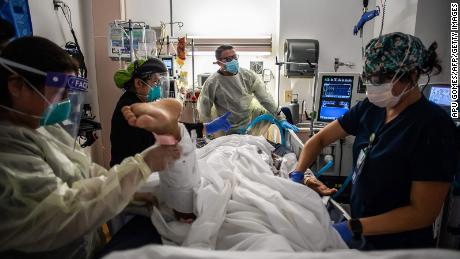
At St. Anthony’s Hospital in St. Petersburg, Covid-19 patients are taking hold of ICU capacity. Hospital president Scott Smith told CNN’s Randi Kaye that 27 of the facility’s 28 ICU beds are for Covid-19 patients, and around 85% of the hospital’s Covid-19 patients are unvaccinated.
Florida has fully vaccinated 54.8% of its residents as of Saturday, CDC data shows. As of Saturday, the state was using more than 43% of its ICU beds to treat Covid-19 patients, according to data from the US Department of Health and Human Services. Nationwide, nearly 31% of ICU beds were being used for Covid-19 patients.
Richard Murphy, left, recieves Covid-19 vaccine at Montbello Barbers in Denver on July 29, 2021.

Vaccines provide critical protection against variants

Despite the prevalence of the more contagious Delta variant in the US, vaccines have shown to remain highly effective against hospitalization, a CDC study found.

Among all ages, the Moderna vaccine was 95% effective against hospitalization, while the Pfizer/BioNTech vaccine had an 80% effectiveness and the Johnson & Johnson vaccine had a 60% effectiveness, the study found.

But among those 75 and older, the study found vaccine effectiveness against hospitalization was lower. Effectiveness against hospitalization for adults under 75 was 89%, but it was 76% among those age 75 and older, the study found.

CDC study: Unvaccinated 11 times more likely to die from Covid-19

Meanwhile, the Mu variant of Covid-19 has emerged on health experts’ radar, but Dr. Anthony Fauci assured people Friday that it doesn’t exhibit signs of being more resistant to the vaccines more than the Delta variant.

“The reason it was brought to attention, it had a number of mutations that were of interest. But when you look at the effect of antibodies against these mutations, it is not a matter of alarm, in that although it diminishes somewhat the protection, it falls well within the range of Delta and Beta (another coronavirus variant),” Fauci said at a White House Covid-19 Response Team briefing.

And as federal health officials consider a booster vaccine dose for most Americans, full vaccination still means either two doses of an mRNA Covid-19 vaccine or one dose of Johnson & Johnson’s Covid-19 vaccine, CDC Director Dr. Rochelle Walensky said Friday. But she acknowledged that may change.

“I anticipate over time that may be updated, but we will leave that to our advisers to, to give us some recommendations,” she said during a White House Covid-19 Response Team briefing.

Testing helps avoid school quarantines, expert says

Meanwhile, as schools nationwide struggle with returning safely to classrooms, one former federal health official urged that Covid-19 testing is an effective approach to preventing outbreaks.

Placing students in “pods” in schools and routine asymptomatic testing are the most effective ways to try and reduce spread in schools, former US Food and Drug Administration Commissioner Dr. Scott Gottlieb said.

He explained that regular testing can prevent a large number of students from quarantining, and therefore, not miss classes.

Florida teen who was hospitalized with Covid-19 wants to get vaccinated and says others should get the shot too

“Rather than quarantine that whole classroom you just test them in a serial fashion to make sure that you didn’t have an exposure that led to a downstream case and so you can actually use testing to prevent quarantines.” he said Friday during an Axios event.

He added that even as Covid-19 case rates decline, children are still suffering from a surge.

“Even as cases decline in every age category, the one age category where it’s continuing to increase is in school aged children,” he said.

In Fulton County, Georgia, at least seven schools will move to remote learning starting Monday, the district said in a Facebook post.

Students at Westlake High School, Sandtown Middle School and Renaissance Middle Schools are moving to remote learning due to a “high volume of positive cases and direct contacts” and have reached Level 2, which includes having 3 or more students or staff members test positive at the same site. The school system said it anticipates in-person learning to resume at these three schools on September 21.

CNN’s Virginia Langmaid, Deanna Hackney, Deidre McPhillips and Kay Jones contributed to this report.


Source link

The post US coronavirus: 26 states have now fully vaccinated at least half of all residents. But a surge of unvaccinated Covid-19 patients is straining hospitals recently appeared on Medical School News.
Controlling HIV | Harvard Medical School


HIV is a master of evading the immune system, using a variety of methods to prevent the body from being able to find and kill it. The vast majority of people living with HIV require daily medication to suppress the virus and therefore prevent the development of AIDS. 

 But for a small subset of people, this battle between the immune system and the virus looks quite different. Known as controllers, they have immune systems that can suppress the virus without any need for medication.

Get more HMS news here

Whereas most controllers can suppress the virus indefinitely, some eventually lose control over the virus and require medication to achieve viral suppression.

In a paper published Sept. 7 in Immunity,  Harvard Medical School researchers at the Ragon Institute of MGH, MIT, and Harvard reported that, in these cases, control is lost after a type of immune cell, called a cytotoxic T cell, loses the ability to proliferate and kill HIV-infected cells. 

In order to find these differences, the researchers, led by David Collins, HMS research fellow in medicine at Massachusetts General Hospital, compared samples collected over several years from cohorts of HIV controllers at the Ragon Institute and the University of California at San Francisco.

The study included 17 subjects with aborted control and 17 with durable control, whose immune systems continued to suppress HIV over years of observation. 

In a successful immune response, cytotoxic T cells recognize small pieces of HIV, called antigens, which are found on the surface of infected cells. The T cells then kill the infected cells, destroying the virus inside.

If mutations in HIV were changing the antigens, the T cells may no longer be able to recognize them. Therefore, the most likely difference, the team thought, might be in the antigens themselves.

Comparing antigens

First, the team compared what type of antigens were presented by infected cells. Co-author Gaurav Gaiha, HMS assistant professor of medicine at Mass General, had previously shown that in controllers cytotoxic T cells often recognize HIV antigens that are unlikely to mutate.

When the team compared the two groups, they found that both sets of T cells responded to the same types of unlikely-to-mutate antigens, meaning they were starting from similar immune responses. 

Working with co-author Todd Allen, HMS professor of medicine at Mass General, and his team, the researchers next sequenced HIV from before and after loss of control, looking for mutations that could cause changes in the antigens the T cells recognized.

Even though HIV constantly mutates, within their cohort of 17 patients, they found only one mutation that allowed the antigen to escape T cell recognition.

Mutational escape wasn’t the answer, either. There was also no evidence of superinfection, the term for contracting a second, separate HIV infection, another theory that had been suggested in case studies.

The difference, therefore, was likely in the immune response itself, instead of being driven by the virus. 

The team looked more closely at the HIV-specific T cells in both groups, focusing on how well the T cells could perform their various functions.

Cytotoxic T cells have two important functions when they encounter a cell presenting an HIV antigen. The first is their ability to kill infected cells by systematically rupturing them, called cytolysis.

The second function is their proliferative function: creating more HIV-specific T cells that can then hunt down and kill other infected cells. 

In progressors—people with HIV who cannot control the virus naturally and who require medication to suppress it—T cells quickly become desensitized to the HIV antigens and stop responding to them, a state known as T cell exhaustion.

T cell dysfunction

Researchers thought perhaps a similar process was happening to T cells when control was lost, but they found no such evidence. With the loss of control came a clear dysfunction of the T cells—the inability to kill cells infected by HIV—but it was a different type of dysfunction than was observed in most infections. 

In the group of people who lost control of HIV, there was a measurable decrease in the proliferative and cytolytic ability of the T cells seen in samples taken before the loss of control, sometimes even years before.

In addition, this dysfunction was only seen in response to HIV; the T cells were able to respond properly to other viral antigens. The researchers had thought that T cell dysfunction would come after or during loss of control, but here, the evidence shows that T cell dysfunction actually precedes it. 

“Loss of proliferation was the most consistent predictor of aborted control in our study,” said Collins. “In these cases, HIV-specific T cells gradually lost their ability to proliferate and become cytolytic, sometimes years before control was lost.” 

In analyses led by computational biologist and second author Jonathan Urbach of the Ragon Institute, the team next compared the genes expressed by the T cells in the two groups and found another important difference, one linked to their earlier observations.

The T cells in the loss of control group had increased expression of KLF2, a gene that, when expressed at high levels, impairs the ability of T cells to proliferate. 

“This study shows that loss of control is notably different from the inability to control the virus found in the canonical immune response to HIV,” said Ragon Institute director Bruce Walker, the paper’s senior author.

“It further underlines the importance of a functional, effective T cell response to HIV in natural immune control of the virus. And with each secret HIV reveals comes an opportunity for us to use that knowledge to our advantage,” said Walker, who is also the Phillip T. and Susan M. Ragon Professor of Medicine at HMS and Mass General.

That knowledge might ultimately help researchers work towards treatments and vaccines that could train progressors’ immune systems. Further work remains to understanding why T cells become dysfunctional in some people and not in others.

The study was supported by the Howard Hughes Medical Institute, Bill and Melinda Gates Foundation, Mark and Lisa Schwartz Foundation, Phillip and Susan Ragon Foundation, National Institutes of Health, Fondo de Investigación Sanitaria, Spanish AIDS Research Network, CFAR Network of Integrated Clinical Systems, Delaney AIDS Research Enterprise, amfAR Institute for HIV Cure Research, UCSF/Gladstone Institute of Virology and Immunology Center for AIDS Research, and Harvard University Center for AIDS Research. 


Source link

The post Controlling HIV | Harvard Medical School recently appeared on Medical School News.

St. Louis laboratories play a vital role in medical research. Here are the latest findings


St. Louis is a hub for innovation and research. Here are local universities and laboratories’ latest discoveries and breakthroughs. 

Memory Loss

1. Washington University researchers found a link between Alzheimer’s disease and circadian rhythm that may explain sleep disturbances in patients.

2. Wash. U. researchers also uncovered a connection between Alzheimer’s disease and receiving too little deep sleep. Seniors who receive less slow-wave sleep may have increased levels of the toxic brain protein tau, which can be a sign of Alzheimer’s.

3. Spinal fluid containing an Alzheimer’s protein can potentially be used to determine what stage of the disease patients are in and lead to improved treatment, per research at Washington University.

4. In a study, Saint Louis University researcher Jeffrey Scherrer found a 42 percent decreased risk of adult patients developing dementia when they previously received a Tdap booster vaccination.

Aging

1. In a Wash. U. study with mice, increasing the FOX01 gene decreased cartilage damage, and decreasing the gene increased symptoms of osteoarthritis.

2. Washington University’s Farshid Guilak created living joint replacements while researching arthritic joint treatment.

3. New technology from Wash. U. researchers uses cartilage cells engineered to release an anti-inflammatory drug as a response to various stressors.

Brain Cancer

1. A recent Washington University study found that glioblastoma patients may respond best to receiving chemotherapy in the morning.

2. Detailed molecular and genetic schematics of glioblastoma tumors were mapped out by Washington University in partnership with Pacific Northwest National Library, Case Western University, and the National Institutes of Health.

3. In a study involving mice, Washington University researchers found that the Zika virus can activate immune cells to remove a deadly form of brain cancer and give a boost to an immunotherapy drug.

Breast Cancer

1. In partnership with Whiterabbit.ai, Washington University researchers developed software to look at breast density to identify women who might need additional screening beyond typical mammograms.

2. Wash. U. researchers also conducted a small clinical trial that found breast cancer patients with working estrogen receptors are more likely to benefit from hormone therapy.

Other Cancers

1. Whole-genome sequencing has been found to be as accurate as the typical genetic tests used to test various blood cancers and determine the type of treatment needed, according to a Washington University study.

2. A two-drug treatment for the bone cancer osteosarcoma could be an effective, less toxic alternative to the chemotherapy drug methotrexate, according to a Wash. U. study.

3. In a mouse study, Washington University researchers found a link between fatty liver disease and liver cancer in an RNA binding protein that regulates the lipid levels in the liver and blood.

4. As noted on p. 112, Wash. U. researchers also pinned down crucial features of protein fragments that may allow better vaccines and immunotherapies to combat cancer.

5. in a Washington University study involving mice, an antibody targeting the TREM2 protein spurred tumor-destroying immune cells.

Other Research

1. In a mouse study, Wash. U. researchers found that a new PET imaging agent called Galuminox that could be used to detect inflammation and study diseases such as cardiovascular disease, cancer, and COVID-19.

2. Wash. U. researchers found a link between a rare single gene mutation and at least some cases of cerebral palsy.

3. According to a Wash. U. study, certain drugs, such as efavirenz, may be able to set off a natural alarm in HIV cells by activating a dormant protein to self-destruct the infected cells.

4. Washington University researchers found that the SVEP1 gene is linked to clogged arteries and an increased likelihood of heart disease, diabetes, and high blood pressure.

5. Two antibodies, called 1G05 and 2E01, protect mice from lethal influenza B virus infections, according to research done by Washington University and the Icahn School of Medicine at Mount Sinai.

6. The packaging of cytokines provides insight into inflammation in asthma, COPD, and COVID-19, according to Wash. U. research. 7. Wash. U. researchers found that mutations in the gene NEMP1 may explain infertility and early menopause in humans.

8. Washington University researchers discovered that losing weight after undergoing gastric bypass surgery can lead to the remission of diabetes through increased metabolism.

9. According to Wash. U. researchers, taking the drug buprenorphine can decrease the risk of overdose for opioid users, even if they are also taking benzodiazepines for anxiety or other conditions.

10. High-fat ketogenic diets might be beneficial in preventing or reversing heart failure linked to a metabolic process, according to SLU researchers.

11. A new imaging agent that can assist in discerning kidney health, called RadioCF, was developed by Washington University.

12. Wash. U. researchers also found that basophil blood cells can be triggered by environmental allergens to alert itch signals to nerve cells, which might be why antihistamines don’t always work for severe itch in eczema patients.

Pediatrics

1. Washington University collaborated with The New England Journal of Medicine and the International Centre for Diarrhoeal Disease Research to conduct a clinical trial in Dhaka, Bangladesh, which found that a designed therapeutic food for malnourished children worked to repair microbiomes in the gut.

2. A Wash. U. study discovered a toxin from E. coli alters intestinal cells

for its own benefit, a fact that may explain issues with malnutrition and stunted growth.

3. According to Washington University researchers, a Chiari 1 brain malformation may stem from variants in two chromodomain genes related to brain development, CHD3 and CHD8, and is more likely in children with large heads.

Institutes & Collaborations

1. Saint Louis University has formed an Institute for Drug and Biotherapeutic Innovation and the Advanced HEAlth Data (AHEAD) Research Institute.

2. Wash. U. scientists, Agilent Technologies, and Merck are expanding research in metabolomics, which can help better understand, for instance, byproducts when the body breaks down a particular drug. 


MAKING STRIDES

NEW TREATMENTS AT AREA MEDICAL CENTERS

Heart Health: To help improve accuracy in treating arrhythmias and other minimally invasive cardiovascular-related surgeries, Washington University inventors and entrepreneurs Drs. Jennifer and Jon Silva developed a 3-D hologram to show a patient’s heart during operations. At Mercy Hospital, Dr. Anthony Tae-Young Sonn (see p. 81) oversees the Transcatheter Aortic Valve Replacement program, which involves replacing a heart valve without having to undergo open-heart surgery. And in November, St. Luke’s Hospital became the region’s first medical facility to implant the Watchman FLX Device, used to close the left atrial appendage for some atrial fibrillation patients without using blood thinners and to help decrease the risk of a stroke.

Joint Approach: SSM Health St. Clare Hospital in Fenton now offers Zimmer Biomet’s ROSA® Knee System, a surgical knee replacement system involving robotic assistance that allows for more precision and flexibility during surgery.

Cold Capping: At Mercy’s Clayton-Clarkson infusion center, the Paxman scalp-cooling system aims to help prevent hair loss in chemotherapy patients by decreasing blood flow and chemo delivery to the scalp’s hair follicles.

Stroke Rehabilitation: Research at Washington University led to the creation of the IpsiHand Upper Extremity Rehabilitation System, which helps stroke patients redevelop control of their arms and hands.


Source link

The post St. Louis laboratories play a vital role in medical research. Here are the latest findings recently appeared on Medical School News.
Saturday, 11 September 2021

US coronavirus: Not getting vaccinated against Covid-19 is like driving while intoxicated, one health expert says


“We need to start talking about the choice to remain unvaccinated as the choice to go out and drive intoxicated,” CNN Medical Analyst Dr. Leana Wen told CNN’s Wolf Blitzer.
Wen’s remarks come after the Biden administration announced Thursday a Covid-19 vaccine mandate plan that directs the US Labor Department to require all businesses with 100 employees or more to ensure their workers are either vaccinated or tested once a week. President Joe Biden also signed an executive order requiring all government employees to get their Covid-19 vaccine shots, with no option for regular testing to opt out.

And while some Republican officials have criticized his move as overreaching, health experts say the President should have implemented stricter measures to curb the recent surge of Covid-19 cases.

“From a public health perspective, it is not overreach at all. And in fact, I wish that they came out earlier and went even further,” Wen said. “We’re in the middle of the biggest public health crisis of our lifetimes. We have more than a thousand Americans who are dying every single day. We, as a society, set laws that protect people’s health and well-being all the time.”

An average of 1,110 people died in the US from Covid-19 each day over the last week, data from the US Centers for Disease Control and Prevention showed on Thursday. The rate of deaths since late August is the highest it has been since early March.

While 73.5% of those ages 12 and up have been vaccinated with at least one dose, tens of millions of eligible recipients remain unvaccinated as the highly contagious coronavirus Delta variant continues to grip pockets of the country. Around 62% of the same age group is fully vaccinated as of Friday.

“The vast minority of Americans are resistant to vaccination, but that’s where the virus has been circulating,” CNN Medical Analyst Jonathan Reiner told CNN’s Don Lemon on Friday. “We live in a country that has rules. You can’t smoke in most buildings in the United States, and you can’t drive drunk. You can’t smoke on planes. And you can’t blow virus into my face.

“That’s how it has to be in this country. And if you’re going to be a persistent threat to the public health by refusing to get vaccinated, well your actions have consequences, and the consequences may be you can’t work at your job.”

An August poll from Gallup showed that 56% of Americans favor vaccine requirements at work while 53% support them for restaurant dining and 61% approve of them for air travel.

And as for those who have not yet gotten their shots, it’s not too late to convince them, former US Surgeon General Dr. Jerome Adams said Friday.

“We need to remember that most of these people are not what I call ‘vaccine-resistant’ — some people say ‘anti-vax,’ I find that term pejorative,” Adams told CNN’s John Berman. “Most of these people are in the movable middle. They’re vaccine-hesitant.

“I found that when I talk to them with compassion and with empathy, I can convince a lot of them over time to get their vaccination.”

Anti-vaccination protesters hold a rally against Covid-19 vaccine mandates in Santa Monica, California, on August 29, 2021.

Health care systems strained

Six US states saw at least a 10% increase in new Covid-19 cases in the past week compared to the week before, data from Johns Hopkins University showed Friday, while the other states didn’t see a change or experienced a decline in cases altogether.

Alabama, one of the states that saw the recent drop in new cases, is now facing a shortage of 60 intensive care unit beds — an uptick of 20 from last Friday, the state’s Health Officer Dr. Scott Harris said.

That’s 60 patients “who are receiving critical care because they’re chronically ill, and yet they don’t have an ICU bed,” Harris said Friday.

'This pandemic is our World War II.' An up-close look at how a Florida hospital fights to save Covid-19 patients

“They’re being cared for in an emergency department or a ward bed that’s been converted to an ICU room or on a gurney in the hallway,” Harris said.

Alabama on Thursday reported 2,667 Covid-19 hospitalizations and 53 deaths, he added.

In West Virginia, 252 Covid-19 patients are in ICUs and another 141 are on ventilators, marking the most people hospitalized with the disease since the pandemic began, Gov. Jim Justice said Friday.

“A high percentage of the folks in the hospitals are unvaccinated,” Justice said. “We lost another 38 people since Wednesday. We’re going to continue to lose people in this surge without any questions,” he said.

Minnesota health officials linked at least 69 Covid-19 cases to the State Fair, according to a statement obtained from the state’s health department by CNN affiliate WCCO. The Minnesota State Fair’s website says the event ran from August 25 through September 5 in Falcon Heights.

Heated debate over mask mandates

Meanwhile, the debate over mask mandates remains heated in many states, especially when it comes to schools.

In Kentucky, schools will have the choice of whether they will mandate masks, after the General Assembly overrode the governor’s partial veto on that portion of a bill pertaining to Covid-19 provisions in schools, officials say.

Students and parents share Covid-19 concerns as the school year starts

Kentucky Gov. Andy Beshear vetoed the part of the SB1 bill that would eliminate the mask mandate for K-12 schools and leave it up to school districts to decide if masking is necessary, he said at a media gaggle on Friday.

Beshear said that the Senate’s recent rejection of a statewide school mask mandate is the wrong choice — and one that will reap harmful results.

“Mask requirement for schools is not only the right thing to do for our young people, especially those who are too young to even get vaccinated,” Beshear said. “It’s our best way to keep our children learning in the classroom.”

After two teachers died of Covid-19 in one week, a Texas school district implements mask mandate

Meanwhile in Mississippi, Gov. Tate Reeves said Thursday that Biden’s vaccine mandate plan is unconstitutional.

“A member of the executive branch of government does not have the authority to mandate something such as this,” Reeves said.

CNN’s Lauren Mascarenhas, Melissa Alonso, Jaide Garcia, Claudia Dominguez and Jennifer Feldman, Mirna Alsharif, Rebekah Riess and Liam Reilly contributed to this report.


Source link

The post US coronavirus: Not getting vaccinated against Covid-19 is like driving while intoxicated, one health expert says recently appeared on Medical School News.

What is an Anesthesiologist

The field of anesthesiology is a medical specialty that focuses on the relief of pain and total care of the surgical patient as ...